A new style of label
yeah, this is not us!
Tuning up
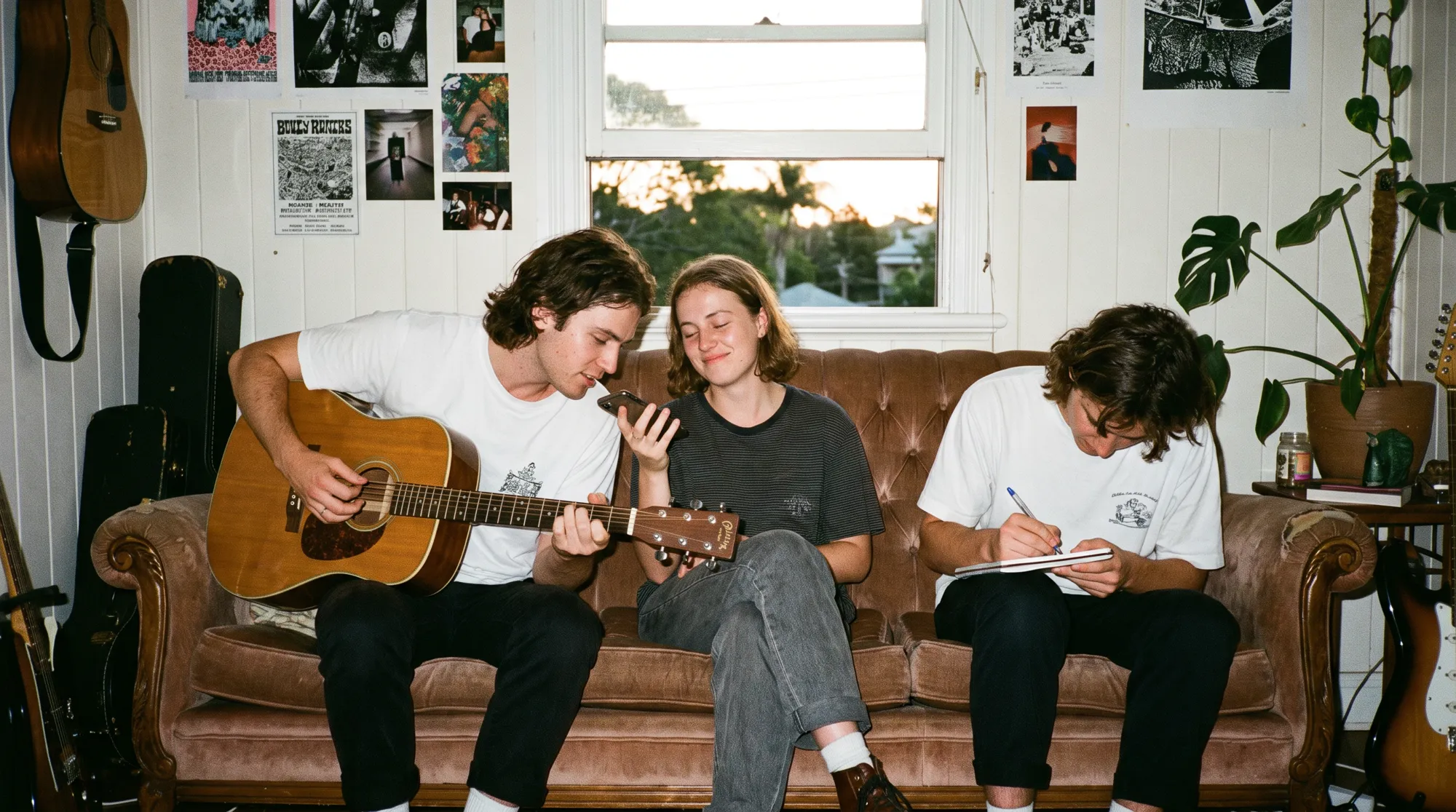
Every week we put you in a group of three local artists. You each listen to the other two songs and send honest, kind notes. You get two sets of fresh ears on yours.
Every week we put you in a group of three local artists. You each listen to the other two songs and send honest, kind notes, so you get two sets of fresh ears on yours. Sign up any week, groups land on Monday, and notes stay open all week. Notes are only seen by the artist they're for, and our filter checks every word. You'll need a free profile and a private listen link, like SoundCloud, Drive or Dropbox.
No judgement here. Bedroom demo, voice memo, AI-assisted sketch, half-finished mix: all welcome.
The rule is simple: say what works first, then what you'd try. And be specific. "The chorus lands at 1:10 but the verse drags" beats "sick track" every time. Specific praise tells someone what to keep. Specific notes tell them where to look.
Getting notes on something you made can sting, even kind ones. That's normal. Read them, then close the tab and come back tomorrow.
You don't have to take every note. Look for patterns: if both listeners mention the long intro, it's probably long. If only one person hated the snare, that might be taste. Your song, your call.
Sometimes a note is so good it ends up in the song, like a new line or a melody. If someone's contribution becomes part of the words or music, that's a songwriting conversation. APRA AMCOS suggests talking splits as early as you can and keeping a written record, noting that "even an email chain is better than nothing" [1]. Our split sheet maker makes that easy.
Small production notes like "turn the vocal up" don't usually make someone a writer. A lyric or a hook might. If you're unsure, talk about it.