

A new style of label
yeah, this is not us!
Tuning up
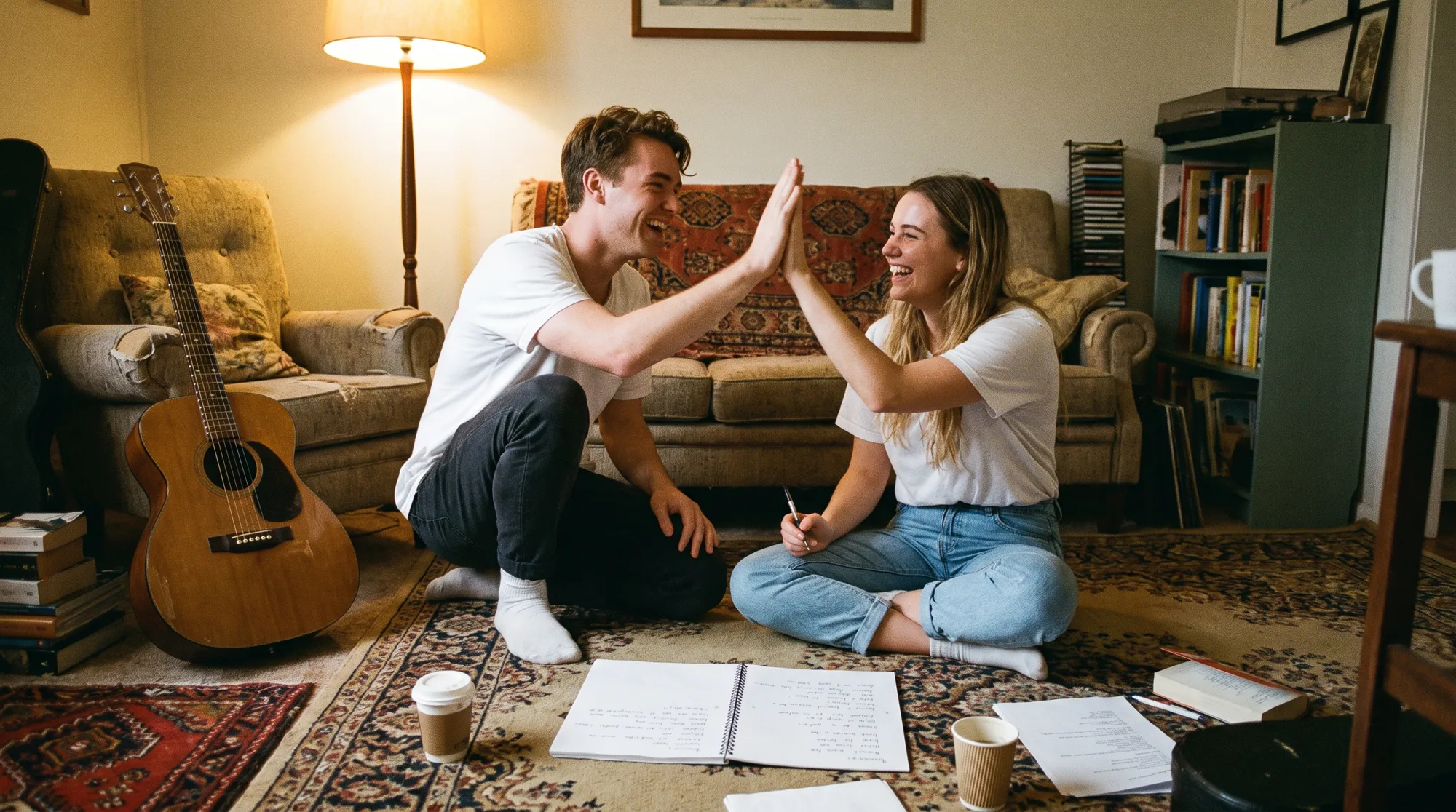
Sort it out while you're still mates. Write down who wrote what share of the song, everyone signs online with their own private link, and you've got a sheet to register with APRA AMCOS.
A split sheet is a simple record of who wrote what share of a song. The words and the music, which the industry calls the composition. Our maker lets everyone sign online with their own private link, and you end up with a sheet you can use to register the song with APRA AMCOS, the body that collects songwriter royalties in Australia.
It covers the song, not the recording. Who owns the master (the actual recorded audio) is a separate conversation.
APRA AMCOS says it straight: "There are no set rules or formula about how songwriting splits should occur" [1]. Splits are whatever the writers agree is fair. Some common approaches they describe [1]:
APRA AMCOS suggests talking splits before you start writing, or as soon as you can if the song's already done [1]. A good opener they suggest: "How are we going to register the song with APRA AMCOS?" [1]. It's practical, not personal, and it gets everyone talking.
APRA AMCOS recommends a written record and notes that "even an email chain is better than nothing" [1]. They also say to register as soon as splits are agreed, because works need to be registered before they can earn royalties [1]. Once a song is registered, changing the splits needs the okay of every co-owner [1], so getting it right first time saves a lot of awkward texts.
If the song does well, money turns up. Money plus vague memories is how mates stop being mates. Sort it out while you're still mates.
Made it with AI tools? APRA AMCOS's current advice is you can still register the work as usual, listing yourself as composer or lyricist, with shares totalling 100% [1]. Be honest about it in your release labelling too.
For anything bigger, like a producer deal, a collaboration across labels, or money upfront, use a proper agreement. Arts Law has a Songwriting and Sound Recording Collaboration Agreement template that covers who owns the music, lyrics and recordings [2]. If there's a real disagreement after registration, APRA AMCOS asks you to contact them first [1].